

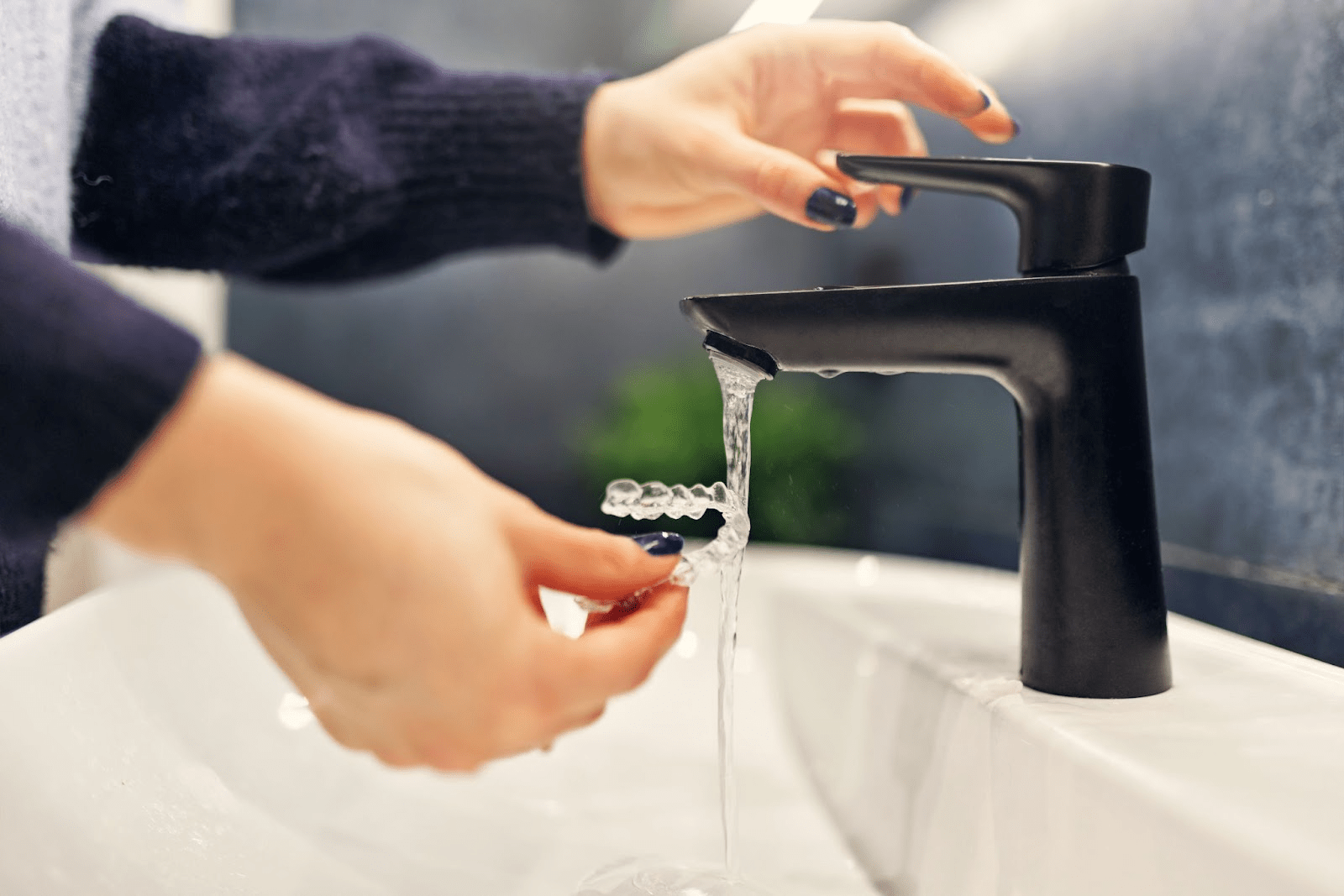
Aligner cleaning comes down to one simple idea: removing bacteria, plaque, and food buildup from your clear trays every day. A proper routine includes a quick rinse after meals, gentle daily brushing, and a deeper soak. Skip these steps, and your trays can trap odor-causing bacteria right against your teeth.
Think of cleaning in three layers.
- Rinsing happens every time you remove your trays.
- Daily cleaning uses a soft brush and mild soap to clear surface buildup.
- Deep cleaning involves soaking trays in a dedicated solution to reach what brushing misses.
Skip any of these, and you may notice the warning signs fast. Cloudy plastic. Yellow tint. A faint smell when you pop the tray out. Those are signals that bacteria and buildup may be collecting in spots your saliva cannot reach.
Clean trays also protect what is underneath. When aligners hug your teeth for most of the day and night, anything trapped inside sits against your enamel and gums for long periods of time. That can contribute to cavities, irritation, and tracking issues. Clear aligners are designed to be worn consistently, so the buildup window is real and worth taking seriously.
The good news? A solid routine takes just a few minutes a day and uses supplies you probably already own. The rest of this guide walks you through the habits, the methods, and the small mistakes that can quietly sabotage clear aligners. Whether you are new to clear aligners or several trays into treatment at Smith & Smith Orthodontics, these tips can help your trays stay clear, fresh, and on track. Our team, including Dr. Brian D. Smith and Dr. Lynn H. Smith, helps patients across Sanford, Bayboro, Siler City, and nearby communities care for their smiles during treatment.
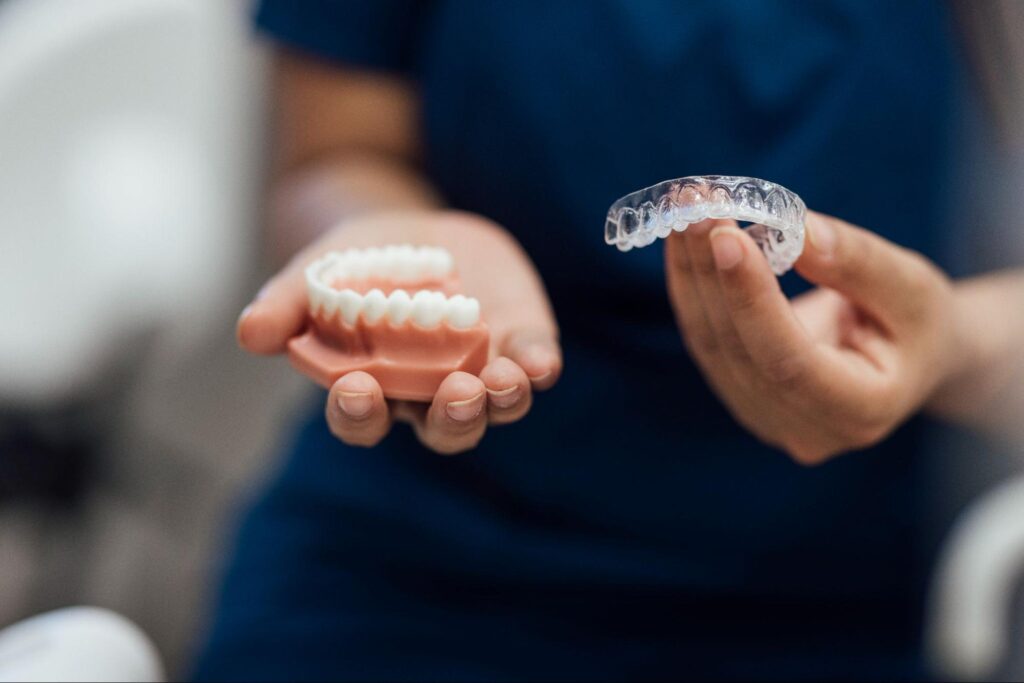
How to Clean Your Aligners: A Step-by-Step Routine
To clean clear aligners properly, rinse them with lukewarm water each time you remove them, brush gently with a soft toothbrush and clear mild soap once a day, soak in a dedicated cleaning solution for deeper freshening, and always brush your teeth before reinserting. Air-dry trays before storing them in a ventilated case.
Here’s the full daily routine, broken down:
- Rinse right away. Every time you take your trays out, run them under lukewarm water. Not hot. Heat can warp the plastic and affect the custom fit your orthodontist designed.
- Brush gently, once a day. Use a soft-bristled toothbrush you have set aside just for your aligners. Add a small drop of clear, fragrance-free hand soap or dish soap. Brush the inside and outside of each tray with light pressure.
- Soak for a deeper clean. Drop your trays into a cup of cleaning solution made for aligners or retainers. Follow the timing on the package, usually 15 to 30 minutes. This helps loosen buildup that brushing alone may not reach.
- Brush again after soaking. A quick second pass with your soft brush removes anything the soak loosened. You will feel the difference.
- Clean your mouth before reinserting. Brush and floss your teeth first. Sliding clean trays over food residue traps it against your enamel for hours. To learn more about how trays move teeth over time, visit our clear aligners treatment page.
- Air-dry, then store. Pat trays dry with a clean cloth or let them air-dry for a minute or two. Store them in a ventilated case so moisture does not lead to bacterial growth.
A few quick reminders. Never use boiling water, bleach, or colored mouthwash. Never wrap trays in a napkin and set them on a table, because that is how aligners end up in the trash. Keep your case in your bag, your car, or your desk drawer. Building these habits early makes the rest of treatment feel easier, and it is something our team reinforces during visits.
Benefits of Keeping Your Aligners Crystal Clean
Clean trays deliver four big wins: a clearer look, fresher breath, healthier teeth and gums, and progress that stays on schedule. A clean tray is the whole point of choosing clear aligners. The moment yours turn cloudy or stained, that discreet look disappears. Daily cleaning helps keep them clear, the way they were designed to look.
The benefits go well beyond looks:
- Clearer trays. Clear plastic stays clearer when you wash away film and food particles before they set.
- Fresher breath. Bacteria living between your teeth and your aligners can contribute to unexpected bad breath.
- Healthier teeth and gums. Plaque trapped under aligners has nowhere to go. Removing it daily protects your enamel and helps keep gum tissue calm.
- Longer-lasting trays. Buildup can affect the look and feel of the plastic. Clean trays are easier to wear comfortably through each stage.
- On-track progress. A tray that fits properly moves teeth as designed. Buildup can interfere with that fit, which may slow progress.
How does cleaning affect my treatment timeline?
Dr. Brian and Dr. Lynn see it often: the patients with the smoothest results are usually the ones with the simplest, most consistent cleaning habits. A tray that seats fully delivers the gentle, planned pressure your teeth need. When buildup gets in the way, that pressure may shift, and your teeth may not track the way the digital plan intended.
Why do clean trays matter for my breath and gums?
A tray covers your teeth for much of the day, which means anything stuck inside has a long time to irritate soft tissue and contribute to odor. Wash that film away daily, and you remove the fuel bacteria need. Your breath stays fresher between tray changes, and your gums are less likely to feel puffy or irritated.
Cleaning Methods Compared: Soaks, Brushing, and Tablets
Not every cleaning method is created equal. Some work well daily, others are better as a weekly refresh, and a few you should skip entirely. Here’s how the most common options stack up.
| Method | Best For | Cost | Notes |
|---|---|---|---|
| Mild soap + soft brush | Daily cleaning | Very low | Budget-friendly, gentle, and effective for everyday film |
| Cleaning tablets | Weekly deep clean | Low | Convenient, fizzy action reaches grooves |
| White vinegar soak, diluted | Occasional deep clean | Very low | Can help with buildup but requires thorough rinsing |
| Retainer cleaning solution | Daily or weekly | Low to moderate | Designed specifically for clear plastic |
| Abrasive toothpaste | Avoid | N/A | May scratch plastic and trap more bacteria over time |
| Bleach or boiling water | Avoid | N/A | Can damage or warp trays permanently |
A few things to keep in mind. Toothpaste feels like it should work, but the grit that cleans your teeth can scratch aligner plastic, creating tiny pockets where bacteria settle in. Vinegar can work in a pinch but may leave a strong taste if you do not rinse well. A good rule of thumb: if a product is designed to scrub or whiten teeth, it may be too rough for soft tray plastic.
The best routine pairs two methods. Use mild soap and a soft brush every day, then add a soaking tablet or solution once or twice a week. That combination handles the daily film and the deeper buildup you cannot always see. Many patients keep tablets at home and a soft brush at work, so they are never caught without a way to freshen up.
What Aligner Cleaning Costs in Time and Money
Cleaning aligners is usually inexpensive and only takes a few minutes each day. A soft toothbrush and mild soap are often enough for daily cleaning, while aligner or retainer tablets can be added for deeper cleaning. The bigger cost is what can happen when you skip the routine: replacement trays, longer treatment, visible staining, or extra visits.
Here’s a quick breakdown of typical supplies:
- Soft-bristled toothbrush: a few dollars, lasts months
- Clear, mild soap: a household item you may already own
- Aligner or retainer cleaning tablets: usually inexpensive and available at many stores
- Ventilated storage case: often provided by your orthodontic office
- White vinegar, optional: a low-cost household item for occasional soaking
Now compare that to the cost of skipping it. Lost or warped trays may mean ordering replacements, which can add expense and time. Cloudy plastic defeats the purpose of clear aligners. Buildup against your teeth can contribute to cavities or gum irritation that may require extra visits.
A few minutes a day is one of the smallest investments you can make in your smile. When you compare the low cost of cleaning supplies against the cost of a replacement tray or stretched-out treatment, the routine is worth it.
Who Should Follow These Tips and When to Ask for Help
Every clear aligner wearer benefits from this routine, no matter where you are in treatment. Day one or final tray, the habits stay the same. The same advice applies whether you are being treated at our Sanford office, our Bayboro office, or you are visiting us from nearby communities like Siler City, Broadway, Pittsboro, or New Bern.
Pay closer attention if you notice:
- Cloudiness that does not rinse away
- Persistent odor from the tray
- Yellow or brown tinting
- A film you can feel with your tongue
- Trays that do not seem to seat as snugly as they used to
For travelers and busy schedules, a “fresh on the fly” approach works well. Keep a small case, a travel toothbrush, and a folding cup in your bag. A quick rinse and brush in any restroom keeps you on track when you cannot run through the full routine. You can read more about discreet treatment options on our clear braces page or compare aligner treatment on our Clear Aligners Sanford page.
When should you reach out to us? If staining sticks around after a proper cleaning, if your trays feel off, or if you are unsure whether your habits are working, ask. Dr. Brian and Dr. Lynn would rather answer a small question now than help you fix a bigger issue later. Our team at Smith & Smith Orthodontics can also recommend cleaning products that pair well with your treatment plan, whether you visit us in Sanford or Bayboro.
This is one of the easiest parts of treatment to get right, and we are always happy to help you fine-tune your routine. A quick check-in during a regular visit usually settles any lingering questions.
Clear Aligner Care for Sanford, Bayboro, Siler City, and Broadway Patients
Smith & Smith Orthodontics provides clear aligner care for patients across Sanford, Bayboro, Siler City, Broadway, Pittsboro, New Bern, and surrounding communities. If you are comparing treatment or location-specific options, you can also explore Clear Aligners Sanford, Bayboro Clear Aligners, Siler City Orthodontist, Siler City Braces, Broadway Orthodontics, and Sanford Orthodontist.
For broader treatment support, visit Our Treatments, Braces Sanford, Orthodontics for All Ages, or schedule a free consult to talk with our team.

Frequently Asked Questions About Aligner Cleaning
Can I use hot water to clean my aligners?
No. Hot water can warp the plastic and change the shape of your custom trays. Always use lukewarm or cool water. A warped tray may not fit correctly, which can throw off your treatment progress and may require a replacement set. When in doubt, cooler is always safer for the plastic.
Can I use toothpaste to clean my aligners?
Skip the toothpaste. Most pastes contain mild abrasives that can scratch aligner plastic, creating tiny grooves where bacteria collect and stains take hold. Stick with clear, mild hand or dish soap and a soft-bristled brush. Your trays will stay clearer and last longer.
How often should I deep clean my aligners?
Brush and rinse your aligners daily, and add a deeper soak several times a week. A soak in a cleaning tablet or retainer solution reaches buildup that brushing alone may miss. The more consistent you are, the less you will notice cloudiness or odor between tray changes.
Can I use mouthwash to soak my aligners?
We do not recommend it. Colored mouthwashes can tint clear plastic, and alcohol-based formulas can be too harsh for regular use. If you want a refresh between full cleanings, plain water with a touch of mild soap is safer. For a deeper clean, use a product made for aligners or retainers.
Why are my aligners turning yellow?
Yellowing usually points to inconsistent cleaning, food residue trapped against the trays, or drinking colored beverages like coffee, tea, soda, or wine without removing your aligners first. The fix is a tighter cleaning routine and only drinking plain water while your trays are in. If yellowing will not budge, bring the trays to your next visit and we will take a look.
What can I eat or drink with my aligners in?
Plain water only. Anything else, including coffee, sweet tea, juice, soda, milk, and especially anything warm, can stain your aligners, warp the plastic, or trap sugar against your teeth. Pop the trays out for meals and snacks, rinse your mouth, and put them back in once your teeth are clean.
Cleaning your aligners well is one of the simplest ways to protect your smile while you are in treatment. A few minutes a day keeps your trays clear, your breath fresh, and your progress on schedule. If you ever have questions about your routine, products, or fit, our team at Smith & Smith Orthodontics is here to help.
Our offices in Sanford and Bayboro welcome questions any time. Schedule a free consult, start with a virtual consult, or bring your questions to your next visit.